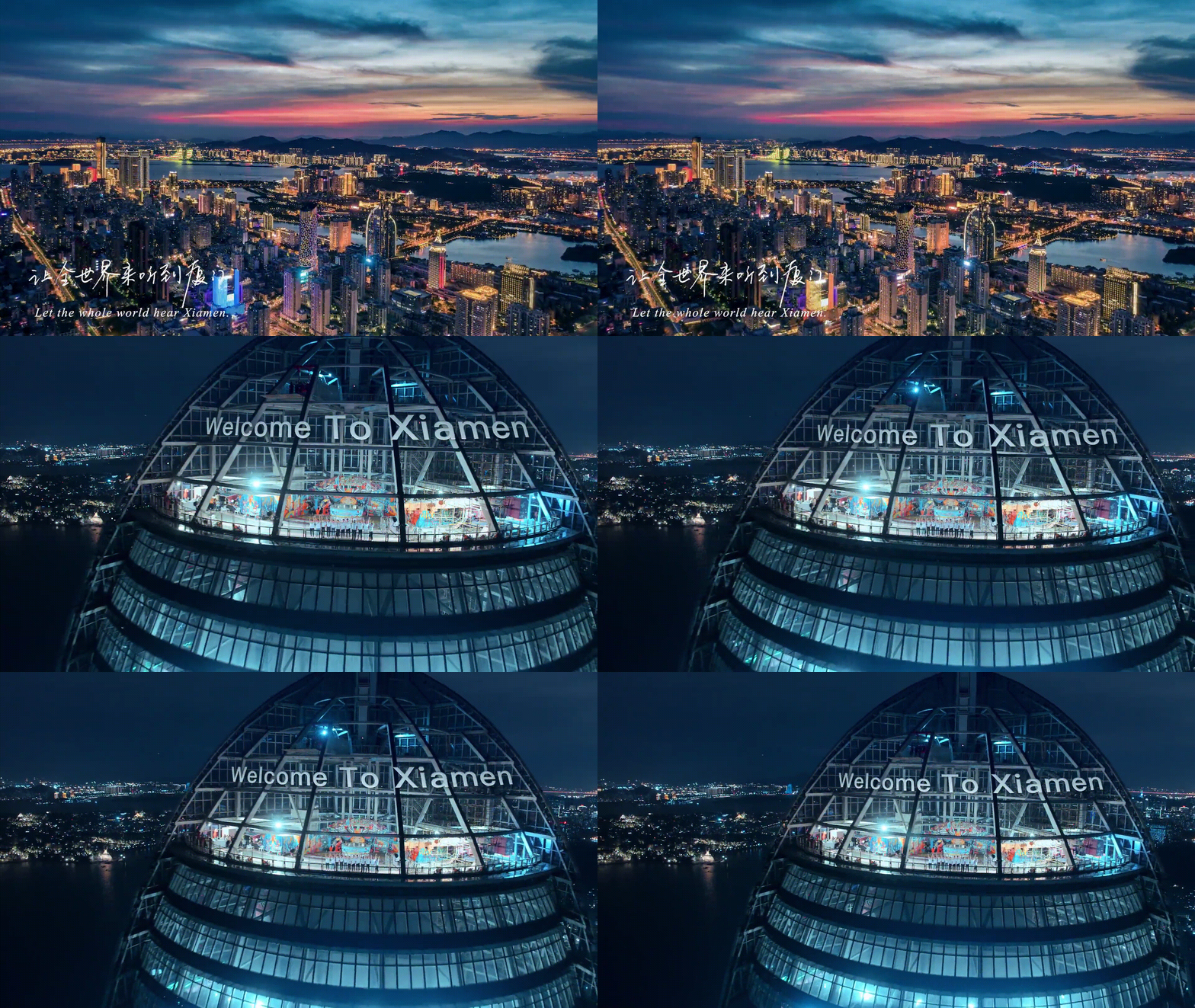
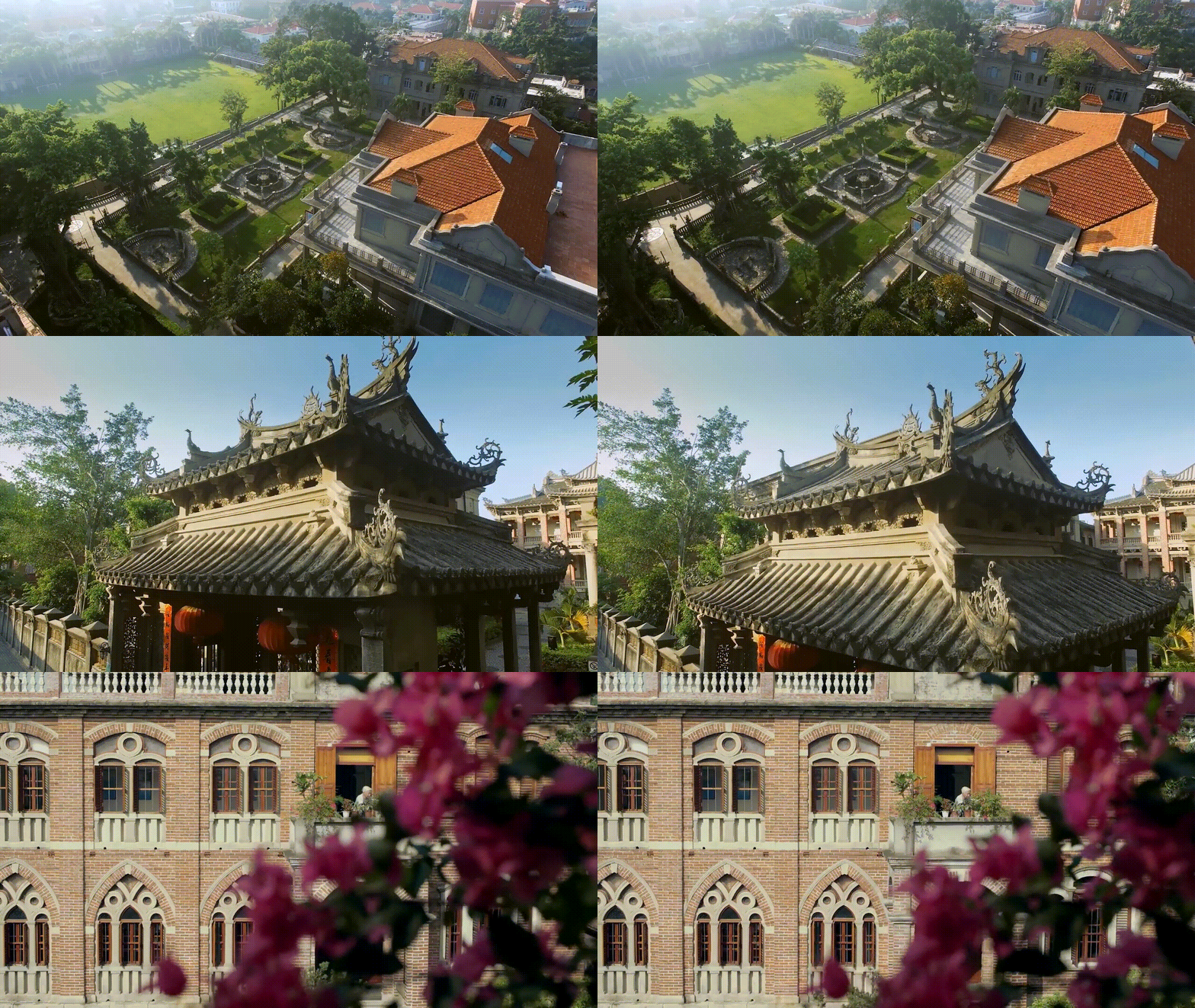

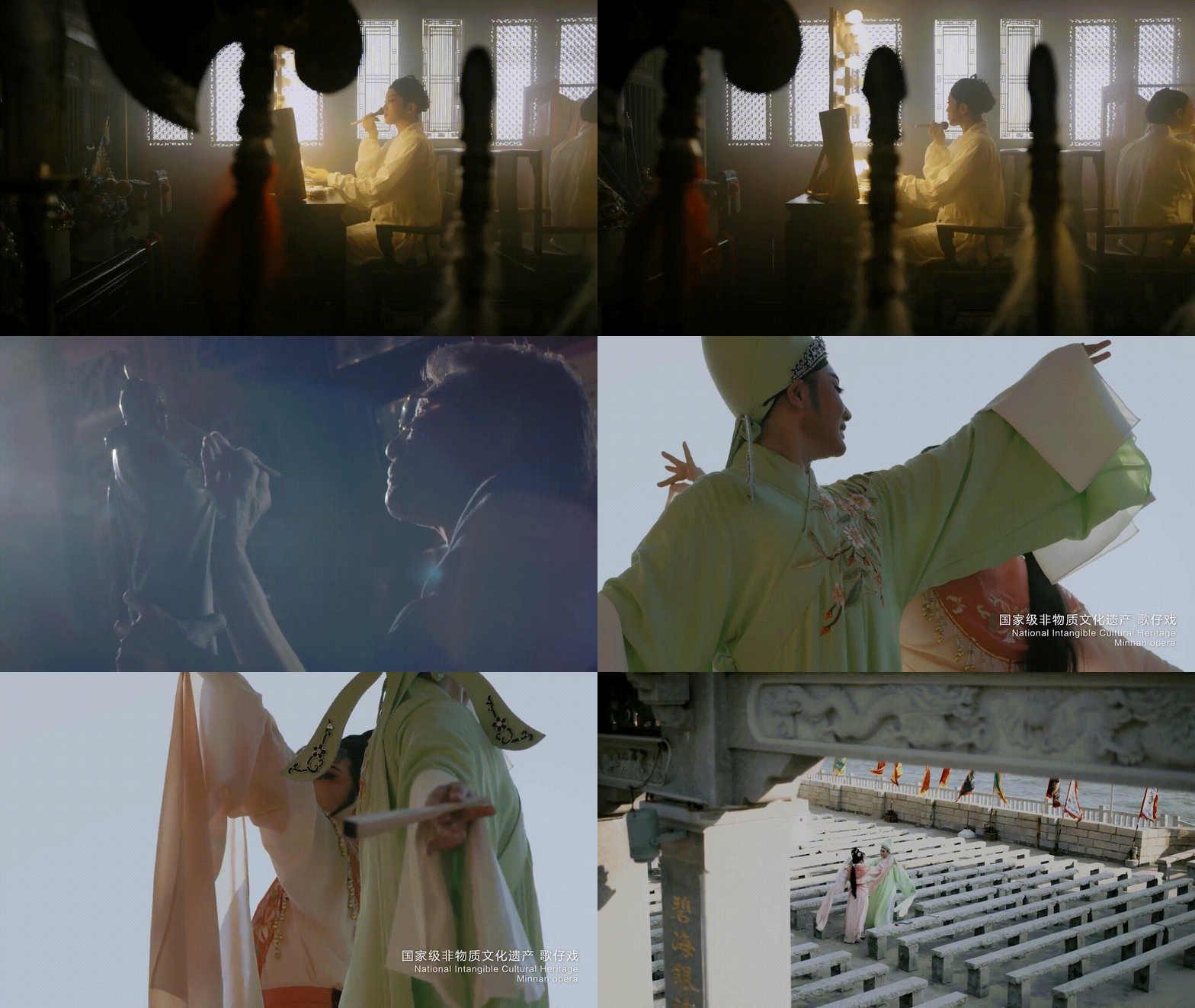
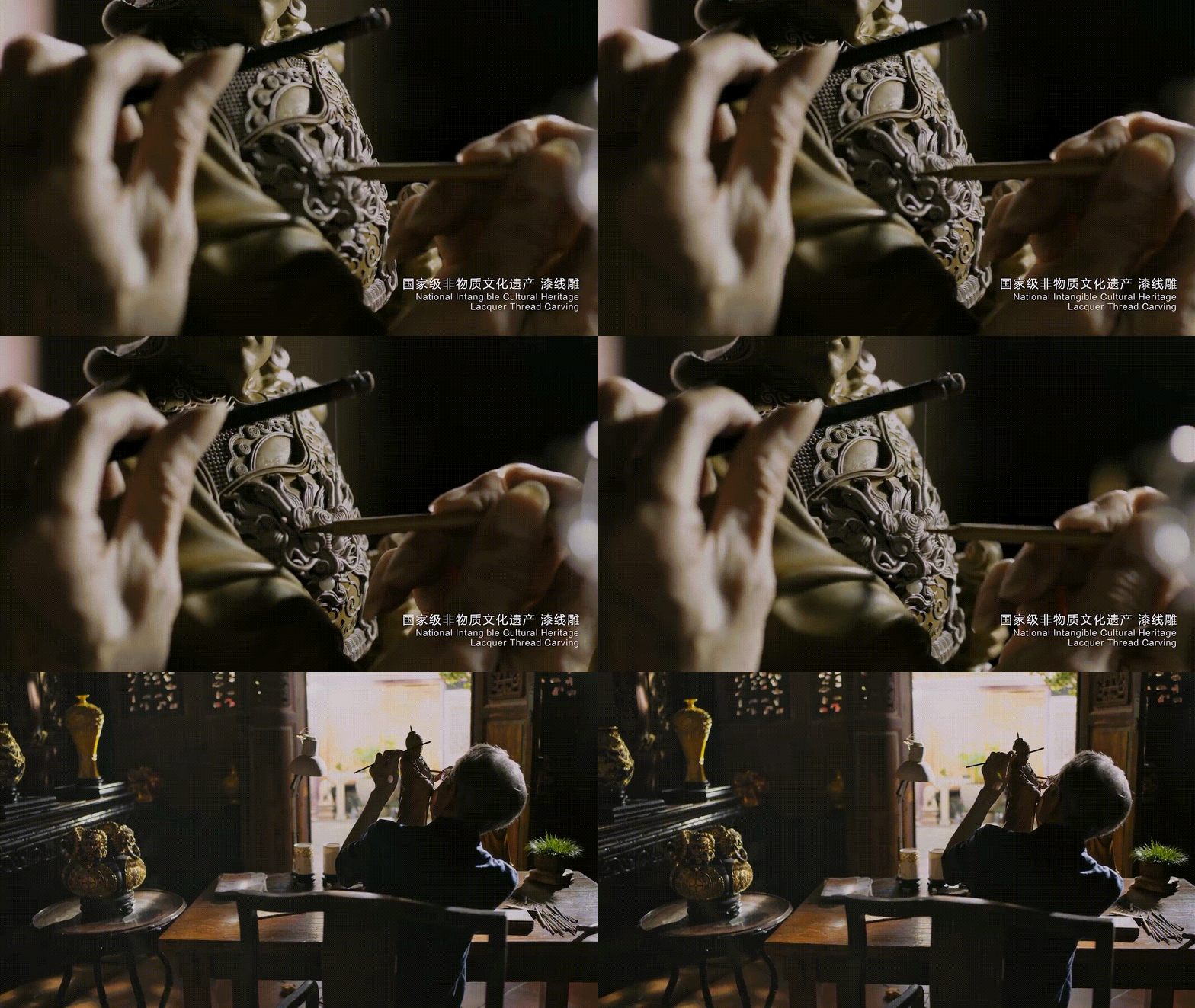
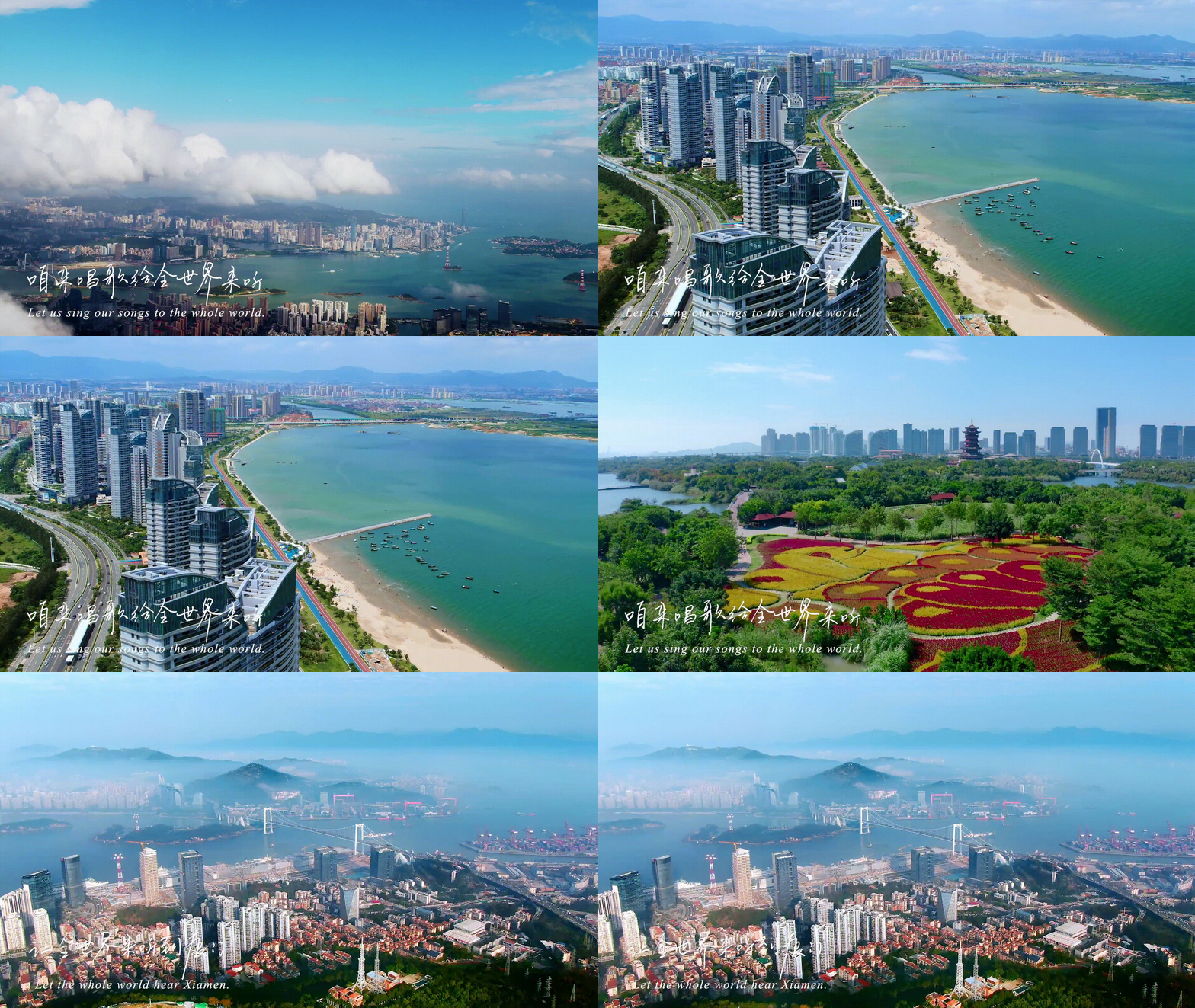
Promotional Video of City of Xiamen - "We are Xiamen"
Arabic ▎English ▎Indonesian ▎Korean ▎Russian ▎Portuguese ▎French ▎Japanese ▎Spanish
Introduction
Xiamen in East China's Fujian province is a beautiful seaside city located on the southeastern coast of China.
Situated in the southeast of Fujian, Xiamen borders Zhangzhou to the west, connects with Quanzhou to the north, and faces Kinmen Island across the sea to the southeast.
With a land area of 1,700.61 square kilometers and a sea area of 390 sq km, Xiamen administers six districts, namely Siming, Huli, Jimei, Haicang, Tong'an and Xiang'an.
South Fujian Dialect is Xiamen's pervasive local dialect among its 5.16 million permanent residents. The city also boasts a diverse community with many of its residents having lived abroad, or natives of Macao, Hong Kong and Taiwan.
Xiamen has been a trading port since ancient times as well as a gateway for China's opening-up and external cooperation. With a natural deep harbor that is ice-free all year round, the city has become an international port city. Being one of the earliest special economic zones in China, Xiamen remains at the forefront of China's reform and opening-up endeavor.
After decades of development, Xiamen has become well known for its innovation and entrepreneurship, with burgeoning new economic forms and new industries, robust trade and investment and easy access around the world by air, land and sea links. Today, it is a beautiful garden city that projects harmony between man and nature.
In 2022, Xiamen's gross domestic product (GDP) reached 780.27 billion yuan ($114.52 billion), up 4.4 percent year-on-year. The city is witnessing rapid growth with large amounts of investors from Taiwan, Hong Kong and foreign countries flocking to the city. Last year, its foreign trade volume hit 922.56 billion yuan, up 4 percent year-on-year, and the city's trade with other BRICS countries (Brazil, Russia, India and South Africa) and countries involved in the Belt and Road Initiative increased 29.9 percent and 12 percent, respectively.
Despite its fame as an industrial powerhouse, the port city still maintains its charm with traditional architecture, delicious food, a pleasant climate and picturesque scenery, which attract many visitors every year.
Three of Xiamen's hot tourist spots are Gulangyu Island, Nanputuo Temple and Xiamen (Wanshi) Botanical Garden, and are among must-see places for visitors in the city.
Gulangyu Island, which is situated in the southwest of the city, sits opposite Xiamen Island across the sea. A panoramic view of Xiamen can be seen when you climb onto Sunlight Rock that overlooks the city. Under the rock stands the Zheng Chenggong statue. To the south of the rock alongside the sea, is the famous Shuzhuang Garden next to the flat bathing beach covered with green plants.
Next to Wulao Mountain in the southeast of the city is the renowned and ancient Nanputuo Temple, and behind the temple is a quiet and beautiful place with rocks and trees. Yunding Rock sits on the summit of Hongji Mountain on Xiamen Island. Xiamen University is nearby, and tourists can visit the Luxun Memorial Hall and Human Museum.
Xiamen Botanical Garden, located in the eastern part of the city, is covered with ridges and peaks rising and wonderful scenery.
Climate
Xiamen's climate is subtropical. It is warm and rainy with an annual average temperature of around 21 degrees Celsius. It is neither too hot in summer nor too cold in winter. The annual precipitation reaches around 1,200 millimeters with the largest amount falling from May to August. Due to the airflow from temperature differences in the Pacific Ocean, typhoons may occur four to five times a year in Xiamen, mainly from July to September.
Visitors and residents in Xiamen can enjoy bright sunlight, gentle breezes, lush plants and colorful flowers in the city all year round. It is one of China's top 10 cities to live in with its high development of culture and education, economic prosperity and picturesque scenery.
Tips for visitors:
1. The best time to visit Xiamen is in spring and autumn. Early summer is also favorable.
2. Visitors are advised to bring medication to help with acclimatization to the environment, such as antidiarrheal medicine.
3. Since Xiamen is a port city, seafood is a specialty in the city, but guests are advised not to over-indulge and eat too much.
4. Typhoons may occur in city around August each year. Please consider the weather conditions when making travel plans.
http://en.fao.xm.gov.cn/2023-04/19/c_49941.htm
Attractions
China International Fair for Investment and Trade (CIFIT)
Xiamen Little Egret Folk Dance Troupe
Founded in 1993, the Troupe is the first one of its kind in China. It has won great fame and honors from all walks of life for distinct folk style and unique regional features.
Huandao Road (Island Ring Boulevard)
OTHERS:
Xiamen-Kinmen Self-Driving Route
Delicacies
Vegetarian Dishes in South Putuo Temple (more about vegetarian dishes)
Baobin (Spring Roll) (more about POPIAH/LUNPIAH)
Tusun Jelly (more about Sandworm Jelly)
Tong'an wrapped Pork (more about Feng Rou)
Shacha Noodle (more about Noodle with Satay Sause)
Local customs
Nanyin: Nanyin is also called Southern Opera and Southern Music which is honored as the living fossil of music culture.
Bobing (Mooncake Dice Game):: Bobing (Mooncake Dice Game, a game in which six dice are thrown into a bowl and the different combinations of numbers result in different scores and prizes) is a unique festive activity in Xiamen during the Mid-Autumn Festival.
Xiang'an Paixiong (Chest-slapping) Dance:: The Paixiong dance is performed by shirtless and barefoot men wearing grass wreaths on their heads. The main dance movements involve squatting while using hands to slap the chest, ribs, legs and palms in turn, and heads nodding away contentedly.
Gaojia Opera:: Dominated by Quanzhou-style chord, its melody absorbs the best of many other music forms and techniques in South Fujian, including band music, wind and percussion music, and adapterization. Its music is a fusion of the highbrow Nanyin (Southern Music) and the more coarse popular tunes, being clear and sweet while strong and robust at the same time.
Gezai Opera:: Gezai Opera is a type of Han Chinese opera originated from South Fujian that is performed in the local Hokkien dialect.Based on the local Gezai (ballads) that spread around South Fujian, it combines elements of Liyuan Opera (South Fujian), Beiguan Opera (Taiwan and South Fujian), Gaojia Opera (South Fujian), Peking Opera (Beijing), and Min Opera (Middle, East and North Fujian).
Kungfu Tea:: 'A cup of tea in the early morning is better than eating fish and prawn'. If you know how important the seafood is to people in Xiamen, then you will know the significance of the tea. Xiamen is one of the places of origin of Kungfu tea and has thick atmosphere of tea culture..
Puppet Show:: It is also called glove puppetry which flourished in Ming Dynasty and become an important type of show of puppetry in Qing Dynasty. The performers use their hands to control the state of the puppet and display the exquisite model of the puppet in their hands, thus it is called 'show in hands'.
Dazuigu: Dazuigu is a kind of comic talking and singing art popular in Xiamen and Southern Fujian.
Tambourine Playing: Tambourine playing is also called playing tambourine and tambourine tactic which is a kind of traditional folk entertainment with thick local features in Tong'an,Xiamen.
Songjiang Battle Array: Songjiang battle array is a kind of folk martial art group performance which integrates southern Shaolin martial art, dance and acrobatics.